





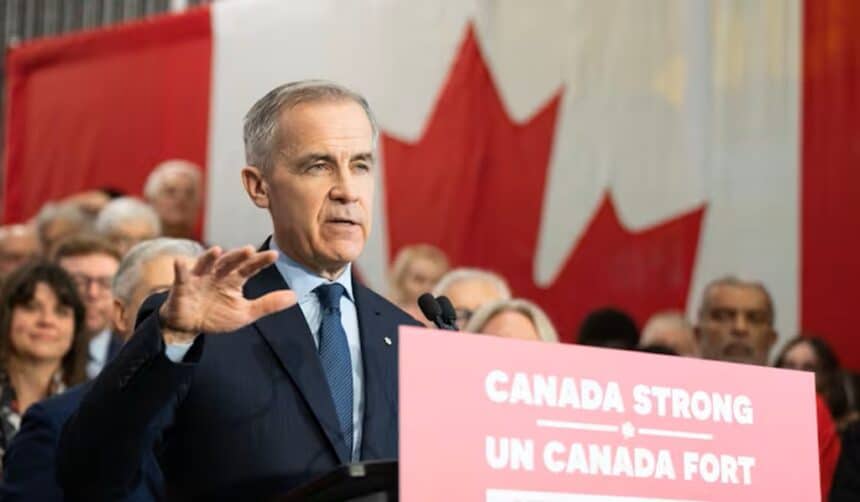
OTTAWA – When Mark Carney became Canada’s Prime Minister in March 2025, many Canadians expected strong leadership on the country’s economic future. Carney, once the head of both the Bank of Canada and Bank of England, came to office backed by a promise to tackle tough trade issues, especially those coming from U.S. President Donald Trump.
His campaign speeches often focused on pushing back against harsh American tariffs, staying firm in talks, and keeping Canadian interests front and centre. He told voters he would take a “tough stance” during negotiations, using a hockey reference that appealed to many who felt uneasy about new tariffs and U.S. threats to key industries.
As summer 2025 progresses, confidence in Mark Carney’s strategy has faded. The latest setbacks have triggered allegations that he broke his word or misled Canadians altogether, with some even calling out his honesty. Many are now wondering if his promises can be trusted at all.
Big Promises, Zero Outcomes
Much of Carney’s campaign targeted Trump’s trade measures. After Trump’s re-election in 2024, his government imposed a blanket 25% tariff on Canadian goods in March and increased steel and aluminum tariffs up to 50%, with a 25% charge on cars.
Trump linked these penalties to disputed arguments about fentanyl and illegal immigration, mapping out a direct challenge to the Canada-U.S.-Mexico Agreement (USMCA) and its long-standing rules.
Overnight, the tariffs cut into Canada’s major sectors, which depend on the U.S. for about three-quarters of their exports. The impact hit especially hard in steel, auto, and aluminum manufacturing.
Catherine Cobden from the Canadian Steel Producers Association highlighted a 30% drop in steel production since the tariffs took effect, a serious sign of damage.
Seen as an outsider to politics with a strong record in finance, Carney promised stability and a fresh plan. Just after his election, on April 28, 2025, he told Canadians that the country would learn from what he called the “American betrayal” and would push for a new agreement that defends Canada’s economic interests.
Carney pushed back on Trump’s suggestion that Canada join the U.S. as a 51st state. He insisted any partnership would be on Canada’s terms. At the G7 meeting in Alberta on June 16, he and Trump set a 30-day target to reach a deal by July 21, bringing a short-lived sense of hope to Canadian business leaders.
Reality Hits and Hopes Fall
By mid-July, optimism was gone. On July 15, Carney admitted that reaching a trade agreement without tariffs was unlikely. Speaking to reporters, he said in French, “There’s not a lot of evidence right now that the U.S. is willing to cut a deal without some tariffs included.”
This was a major step back from his earlier bold talk. Trump then announced a plan to push tariffs even higher, up to 35% by August, though some goods under USMCA would still be safe. The likelihood of further disruption was clear.
The government’s decision to drop the Digital Services Tax (DST) also brought fresh criticism. The 3% tax on large tech firms was a key issue during talks. Trump described the tax as unfair to American companies and paused negotiations until Canada pulled back.
By June 30, Carney’s team scrapped the tax. U.S. officials approved, but many in Canada saw this as backing down. Daniel Béland, a professor at McGill University, called it a “clear win” for Trump, saying Carney looked weak against U.S. demands.
Voter Frustration with Mark Carney
Carney’s handling of trade has sparked a wave of criticism from voters and political opponents alike. On X, several Canadians expressed anger, with some posting that Carney lied about how forceful he would be with Trump. Frustration grew after Trump paused all trade talks, with some posts mocking Carney’s “elbows up” message as empty.
Pierre Poilievre, the Conservative leader, has not missed the chance to highlight these missed targets. He accused Carney of making “unilateral concessions” and claimed the abandonment of the DST showed a lack of resolve.
A July survey by the Angus Reid Institute found that 63% of Canadians support a stronger approach in trade talks, preferring to give no major concessions. Only 46% said they trust Carney to deliver a good deal. Many also pointed to either Trump’s unpredictable tactics or Carney’s inexperience as reasons for their doubts.
Some voters now regret supporting the Liberals. Sarah Mitchell, a Toronto resident, said, “I voted for Carney because he seemed like he could handle Trump. But it feels like he’s just caving. I don’t know if I’d vote for him again.”
This view has spread online and in the media. Robyn Urback, writing for national outlets, called Carney’s strategy a “chicken dance” filled with retreats. Political scientist Blayne Haggart wrote in The Globe and Mail that Carney’s search for a big trade deal had delivered “less than nothing.”
A Softer Approach Draws Fire
Critics have zeroed in on Mark Carney’s move toward compromise after months of tough talk. He decided not to double counter-tariffs on American metals, even though it had been considered earlier.
Industry Minister Melanie Joly defended this choice, citing the unpredictability of the Trump administration. Many critics, though, argue that Carney has not stood his ground. Trade lawyer Lawrence Herman has warned that Trump’s moves show the USMCA’s limits and that Canada could face ongoing tariffs with another review set for 2026.
Still, Mark Carney has supporters who say his approach is realistic. Roland Paris, former adviser on Canada-U.S. matters, told the BBC it’s too soon to judge Carney’s results, noting only the final deal will show what was possible.
Carney has pointed to efforts aimed at reducing Canada’s dependence on the U.S., including an arms agreement with the European Union and speeding up support for key Canadian industries. “We will continue to focus on what we can most control, which is building a strong Canadian economy,” he said, pointing to investments in steel and auto manufacturing.
As the deadline nears on August 1, Mark Carney faces pressure to deliver a deal that protects Canadian industries and keeps the country’s independence intact. Trump has praised Carney as a “terrific guy,” but this personal respect has not led to a friendlier trade deal. The U.S. president will not back away from tariffs, calling his policy non-negotiable.
While Carney has stuck to his promise that “Canada won’t be for sale ever,” more concessions and shifting expectations have chipped away at public faith in his leadership. With the country split—most demanding a tougher line, others willing to compromise—Canada’s future direction is far from clear.
For now, Mark Carney’s pledge of strong trade outcomes has run into the reality of aggressive American policies. Many Canadians are left asking if the prime minister’s earlier promises will mean anything by the time negotiations end.
As talks continue, the public waits to see if Carney can secure the stable future he described or if Canadians will be left with tough choices and fewer options.