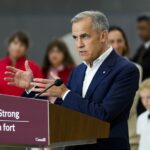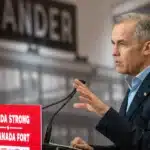






OTTAWA – Political leaders from Canada, the UK, France, and Australia—Prime Minister Mark Carney, Prime Minister Keir Starmer, President Emmanuel Macron, and Prime Minister Anthony Albanese—issued joint statements in late July and early August supporting the recognition of a Palestinian state.
Their move has sparked widespread debate. Many believe it’s less about supporting peace in the Middle East and more about shifting focus from their domestic troubles. With all four leaders seeing a slide in popularity, their recent statements have further complicated talks led by the US and given Hamas a boost at a sensitive moment.
Leaders Under Pressure at Home
The timing of these calls for Palestinian statehood is no coincidence. Prime Minister Carney in Canada, who took office in March 2025, is under fire after a major trade dispute with the US. President Donald Trump’s new tariffs on Canadian goods have dented approval for Carney’s Liberal Party. Polls show his early gains in popularity are fading as an election approaches.
In the UK, Keir Starmer’s Labour government faces criticism for a stagnant economy, with approval ratings dipping below 30%. French President Emmanuel Macron is struggling with backlash over pension changes and rising costs, which have turned many voters against him. In Australia, Anthony Albanese faces sharp criticism for his handling of climate policy and the cost of living, eating away at his party’s lead ahead of upcoming elections.
Some opponents say the sudden recognition of Palestine is meant to distract from these wider issues. “These leaders are failing at home and grabbing at Palestine as an easy way to appear morally strong while ignoring their real problems,” said Dr. Sarah Klein of the Global Policy Institute in London. On social media, voices like @EYakoby called the moves a “desperate” bid to “appease Islamist voters” while facing sinking approval.
Immediate Impact in the Middle East
The announcements quickly affected the Middle East peace process. The Trump administration, which takes a strong stance against Palestinian statehood under Hamas, was trying to broker a ceasefire. As news of support from these countries broke, Hamas walked out of negotiations, arguing that growing international support for statehood gave them reason to hold their ground.
“Since Macron, Starmer and Carney said they’d recognise a ‘Palestine,’ Hamas has left peace talks and released four disturbing hostage videos,” posted @EYakoby, echoing a common view among critics.
This decision has made the hostage crisis in Gaza even worse. With over 100 hostages still trapped, Hamas has used talk of statehood to strengthen its position. Middle East specialist Dr. Omar Rahim said, “Hamas sees this as a green light to dig in.
They’re using the hostages to pressure for better terms.” Posts like one from @BrugesGroup blame Carney, Starmer, and Macron for giving Hamas a reason to keep the hostages until they see progress on statehood.
Trump and Netanyahu Push Back
President Trump says he will not accept Palestinian statehood while Hamas remains in control. “Recognising a Palestinian state now would reward Hamas,” Trump said in July. His words have strong support among his followers and the Israeli government.
Benjamin Netanyahu, Israel’s prime minister, said Carney, Starmer, and Macron are “on the wrong side of history” for their joint statement.
Trump’s approach is consistent with his wider foreign policy, which relies on direct talks and economic pressure, not big international gestures. “Trump’s not moving,” said Dr. Rahim. “He sees these moves as a betrayal by allies who put their politics first.” The White House has warned that if these countries move forward with recognition, there could be diplomatic fallout and even trade penalties.
Critics See a Political Distraction
Many political commentators call the statehood push a tactic to change the story at home. Carney’s announcement came days after a heated trade argument with America, leading some to believe he is trying to appeal to progressive voters.
“Canadians will get behind Carney’s bad move because it annoys the Americans,” wrote @brianlilley. In the UK, Starmer may hope that support for Palestine will rally Labour’s traditional base. Macron, often accused of being out of touch, likely wants to improve his image as a world leader. In Australia, Albanese could be hoping to regain support among urban voters.
But this tactic carries risks. By backing such a divisive issue, the leaders risk losing support from moderates and those who favour Israel, while not delivering results. “This is classic political distraction,” said Dr. Klein. “They want a quick fix to their polling problems, but it’s backfiring by making peace talks harder and giving Hamas more power.”
The consequences are already visible. Hamas has tightened its grip on the hostage crisis, peace efforts are stalled, and US-led talks face new problems. While Carney, Starmer, Macron, and Albanese present the move as a moral stand, it looks to many like a last resort to win back domestic support.
With Trump taking a firm position and Hamas using the statehood debate for its own goals, a Middle East settlement seems less likely. The leaders may find that their decision costs them dearly both at home and abroad.