




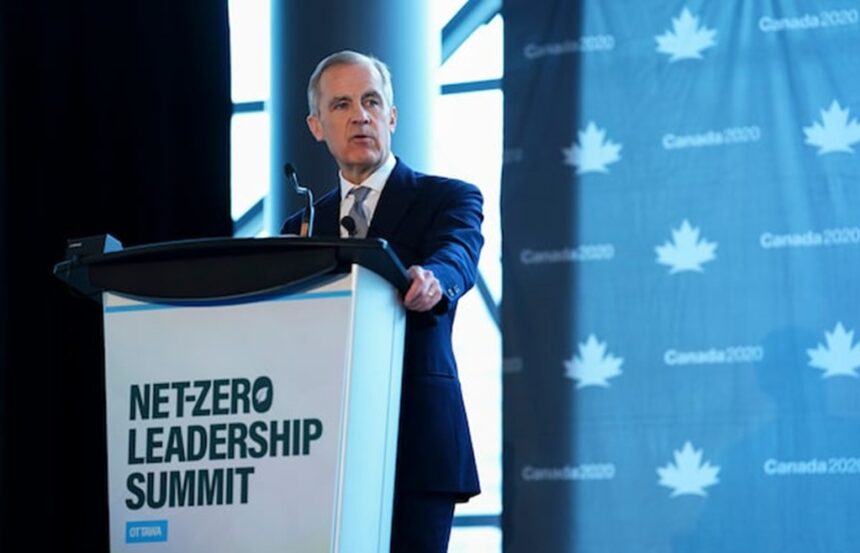
OTTAWA – Mark Carney’s efforts toward a net-zero economy have come under fresh scrutiny in the United States. As Canada’s Prime Minister and the former Bank of England Governor, Carney has driven the Glasgow Financial Alliance for Net Zero (GFANZ) since its high-profile launch at COP26 in 2021.
The group brought together banks and financial firms to shift their investments and lending practices toward net-zero emissions by 2050. Now, U.S. officials are questioning whether these coordinated actions could break antitrust laws.
The U.S. House Judiciary Committee, chaired by Republican Jim Jordan, has stepped up its investigation into GFANZ. Earlier this year, the committee interviewed Carney and former U.S. Securities and Exchange Commission head Mary Schapiro.
The central worry is that GFANZ’s rules could encourage financial firms to collude, especially by nudging them to reduce fossil fuel funding. Critics claim this could limit competition and push up costs for people and businesses.
The Net-Zero Banking Alliance (NZBA), part of GFANZ, has lost several top U.S. banks, including JPMorgan Chase. CBC News reported on these exits in January, pointing to growing fears about legal consequences for American banks involved in these climate-focused groups.
The Net-Zero Insurance Alliance (NZIA), another GFANZ project, shut down earlier this year after companies like Munich Re and Zurich cited serious antitrust concerns and mounting pressure from Republican-led states.
Carney’s Greenwashing
Carney has long promoted greenwashing finance, including as a United Nations Special Envoy. He keeps defending GFANZ’s mission to drive the large-scale funding needed for a net-zero future.
He has admitted that anti-trust risks are real, stating in 2022 that if companies join together and all stop funding something like coal, “then you have a potential problem.” In response, GFANZ eased some of its demands and no longer requires members to back the United Nations’ strict Race to Zero goals.
GFANZ’s troubles have gained momentum from a wider “anti-woke” push in the U.S. Politicians and activists who oppose ESG (Environmental, Social, and Governance) standards say GFANZ is forcing a political agenda. A group of Republican state attorneys general, led by Utah’s Sean Reyes, urged insurers to leave NZIA, suggesting it was a scheme to drive up insurance prices.
BlackRock, the world’s biggest asset manager, also left the Net Zero Asset Managers Initiative due to these concerns, which led to a $4 billion drop in assets under management.
Since taking over Canada’s Liberal Party and becoming Prime Minister in 2025, Carney has faced more questions about his alliances. Conservative leader Pierre Poilievre and others say Carney puts net-zero goals ahead of Canadian interests, especially in oil and gas, which is still a big part of Canada’s economy.
An opinion piece in the Financial Post argued that Carney’s policies could sideline the country’s fossil fuel sector. Poilievre also pointed out that Carney’s former employer, Brookfield Asset Management, invests in pipelines around the world while pressing for decarbonization in Canada.
To address conflict of interest concerns, Carney has placed his assets, including holdings in Brookfield and fintech firm Stripe, into a blind trust. The ethics commissioner’s July 2025 disclosure listed investments in firms like Amazon, Apple and Pfizer, plus nearly $7 million in Brookfield stock options.
A conflict-of-interest screen bars Carney from taking part in decisions directly affecting these 103 companies, though he can take part in broader policy work.
With U.S. scrutiny growing, GFANZ’s future is uncertain. While banks in Canada and Europe still support the alliance, the loss of major U.S. members has hurt its international standing.
Experts like Diane-Laure Arjaliès at Western University’s Ivey Business School say the challenge of meeting net-zero targets has slowed progress. Groups like Shift Action for Pension Wealth and Planet Health believe the backlash is more about politics than public resistance.
Carney continues to push for a shift to clean energy, pointing to big financial gains for those investing in green technology. In his 2021 book “Values: Building a Better World for All,” he describes climate change as both a threat and an opportunity.
Still, growing anti-trust investigations in the U.S. and political pushback at home have turned Carney’s net-zero push into one of his toughest challenges yet.