





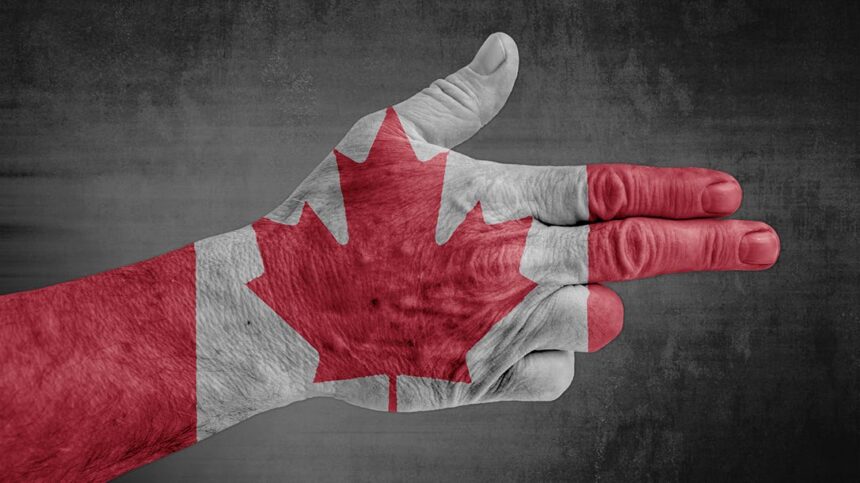
TORONTO – In May 2020, Prime Minister Justin Trudeau’s government banned about 1,500 models of what it called “assault-style” firearms. This sweeping decision was touted as a big win for public safety. Alongside the ban, officials promised a mandatory buyback, referred to as a Gun Buyback, to reimburse legal gun owners forced to give up their newly banned firearms.
By August 2025, however, this project had fallen flat. Not a single firearm from private owners has been turned in, while costs keep climbing and resources are pulled away from more urgent safety needs, such as policing and border security. Recent figures from the Canadian Taxpayers Federation show the program has already consumed $67.2 million, with nothing meaningful to show.
The Fraser Institute warns the total could climb over $6 billion. Many see this plan as costly, overreaching, and unfair—mainly impacting responsible, licensed gun owners. Meanwhile, those committing gun crimes largely escape real consequences.
Four Years, No Results
The public first learned of the buyback scheme after the tragic Nova Scotia shooting in 2020, where 22 people were killed. The government pitched its plan as a fast, tough response: ban the guns, block new sales and imports, then give owners two years to hand them in safely.
The Gun Buyback scheme has been met with skepticism by many, questioning its effectiveness and impact on genuine safety issues.
At first, officials put the price tag at $300 to $400 million, expecting to collect around 150,000 firearms. As of October 2024, not a single gun has come in from individuals, yet the government has already spent over $67 million, with Public Safety Canada responsible for the bulk of that, and the RCMP spending the rest.
Almost $11.5 million has been paid to outside consultants for software, logistics, and communications. Critics point out that while the project stalls, outside businesses are cashing in. The National Firearms Association has called for an audit and investigation, demanding answers about spending, staffing, and whether any laws have been broken.
The latest extension for gun owners allows them to keep their firearms until October 30, 2025. Many expect this deadline will stretch yet again, since the government still has no real way to collect the guns.
Hidden Costs Keep Escalating
When it comes to the price of the gun ban and buyback, estimates are all over the map—but none look good for taxpayers. The Parliamentary Budget Officer’s 2021 report suggested that compensating gun owners alone could cost between $47 and $756 million, not counting costs to run the program or destroy turned-in firearms.
The Fraser Institute now projects $4–6 billion for the full cost. This far exceeds the $200 million estimate shared by the government in 2019, which was quickly raised to $400 million after early reviews. Internal records peg just the program’s admin costs at $2 billion, and since then, extra firearm models have been added, bringing the total banned count to about 2,000.
In 2022, the program expanded to include gun magazines, grips, and bolts. That move inflated costs even more. Gage Haubrich at the Canadian Taxpayers Federation compared this to the infamous long-gun registry, which started at a $2 million price and hit $2 billion before being cancelled.
By including common accessories, many of which are owned in multiples by sport shooters or hunters, critics say the plan is becoming more expensive while doing little to reduce criminal gun use. Supporters claim the change will slow “ghost gun” assembly (untraceable homemade guns), but the added complexity only makes the buyback less manageable.
Conservatives Slam the Gun Buyback for Missing the Mark
Conservative politicians have called out the Liberals for spending massive sums to target Canadians who respect the law and ignoring real crime. Pierre Poilievre and his party vow to scrap the program if they win the next federal election.
Their main argument: the buyback pulls dollars and officers away from efforts to fight actual criminals. Data from Toronto police backs this up, showing that most guns used in crime are smuggled into Canada from the U.S. The Toronto Police Association says about 85% of crime guns they seize come from south of the border, making a case for tighter border security rather than domestic confiscation.
Raquel Dancho, vice-chair of the House public safety committee, calls the buyback a “$750 million boondoggle” that only penalizes those who follow Canada’s strict licensing system. A Conservative report to the House public safety committee points out that past bans on semi-automatic rifles and handguns haven’t produced any major drop in gun-related killings.
Instead, it suggests redirecting funding to crack down on gun smuggling, help police, and support community programs that steer youth away from gangs. These goals, the report says, would reduce violence, unlike the current buyback.
A major sticking point is the government’s focus on “assault-style” firearms, a term not defined by Canadian law. The ban started with semi-automatic models, later pulling in hundreds of hunting rifles and shotguns. This broad sweep has put many hunters, sport shooters, and Indigenous users on edge, as their daily and cultural tools are now at risk.
The Canadian Sporting Arms and Ammunition Association estimates that gun shop owners alone face close to $1 billion in unsellable stock. With no compensation plan in sight for most, business owners feel abandoned. The 2022 push to expand the list even further, including the popular SKS hunting rifle, drew such strong opposition that the federal government had to retreat.
Draining Critical Public Safety Funds
Many in law enforcement and government say the buyback’s biggest flaw is pulling resources from areas where help is needed most. According to Statistics Canada, violent crime involving guns jumped 10% between 2020 and 2022. Of guns used in these crimes, police say the bulk—between 70% and 90%—are smuggled in, mostly from the United States.
Licensed Canadian gun owners, who are vetted and tracked, present little risk. Yet, the buyback targets this group rather than funding border checks, the RCMP, or community prevention efforts.
The National Police Federation, which represents RCMP members, has called the buyback a misallocation that distracts officers and diverts funding. President Brian Sauvé told Members of Parliament the program adds another layer of work to already overstretched forces.
Governments in Ontario and Saskatchewan have gone further, blocking the buyback’s rollout and passing laws that prioritize actual policing over seizing firearms from legal owners.
Spending tells the real story. The Liberals have put just $312 million over five years toward fighting smuggling and gun trafficking—barely a blip compared to the billions the buyback might cost.
In 2022, the Canada Border Services Agency seized over 1,200 guns at the border, a record. But experts agree that better funding and technology are needed to keep up. Polls show most Canadians want action on smuggling, not more money thrown at a buyback that doesn’t stop crime.
Lawful Gun Owners Left in the Cold
Canada’s 2.3 million licensed gun owners are frustrated and angry as this saga continues. Since 2015, their numbers have grown by 17%. Each owner must go through background checks, training, and testing before buying a firearm.
Despite their clean records, these individuals are painted as threats under the new law, told to surrender their possessions or face charges. With the amnesty extended until late 2025, millions of guns remain in legal limbo, with no clear plan or process for collection. Owners can give up their firearms to police, pay to have them deactivated, or try to export them, but each choice means hardship or financial loss.
Expanding the ban to include gun parts has made matters even worse. Accessories like grips or magazines are key parts for hunters or sport shooters, and surrendering them limits the use of their legal firearms.
Critics argue this move puts an unfair burden on Indigenous people as well, as many banned models are important for subsistence and tradition. While the government pledged to consult Indigenous communities and help with the transition, few changes have followed.
Gun Crime Persists While Laws Target the Lawful
While the federal government zeroes in on legal gun owners, criminal use of guns goes largely unchecked. Police and experts have made it clear: criminals do not participate in buybacks or follow bans. Their guns are smuggled or homemade, and impossible to trace to start with. Evan Bray, Chief of the Canadian Association of Chiefs of Police, captured the problem clearly when he noted that the law only works with those willing to obey it.
The problem is made worse by Canada’s bail system, regularly criticized for allowing gun offenders out of jail within hours. Gangs and organized crime groups keep running with little real fear of punishment. The Conservatives argue for tougher penalties and want to shift the focus to tackling these root causes, not punishing the people who already follow rules.
Wasted Money on the Gun Buyback
Many see the Liberal buyback project as an example of wasted effort and bad management of the gun buyback program. Even some groups that back strong gun controls, like PolyRemembers, have spoken out.
Their spokesperson, Nathalie Provost, called the effort a “sieve” that doesn’t improve safety. The program has only managed to collect 7,299 firearms—from retailers, not private owners. By all measures, that’s far short of the estimated 150,000 to 500,000 guns that the ban covers. While gun shops have received some compensation, private owners have no clear path or timeline.
Online, many prominent voices in the firearm community continue to call the buyback a failure. Frustration is high, with some saying the project should be scrapped and public money put to real use.
A Call to Focus on Real Safety and Canadian Rights
Supporters of Canada’s firearms community argue that the gun buyback program wastes money while ignoring real threats. Legal gun owners, including hunters, sport shooters, and Indigenous peoples, contribute to the country through business and conservation, generating nearly $6 billion each year and supporting 45,000 jobs. Many feel unfairly targeted by policies that focus on image rather than results.
Instead of spending billions on a buyback, this money could pay for thousands of new police officers, strengthen border checks, or support after-school programs that keep youth away from crime.
As things stand, those who respect the rules are targeted, while criminals benefit from weak enforcement and a porous border. The Conservative promise to end the buyback and put funds toward real solutions seems to connect with a wide range of Canadians.
With the October 2025 amnesty deadline approaching and little to show for all the spending, the Liberal government faces tough questions. Many are asking how much longer public money and patience will last before priorities shift to where they’re needed.
In the end, the gun buyback program stands as a warning about waste and poor planning. After four years and almost $70 million spent, and with costs heading toward $6 billion, the project has failed to collect any firearms from regular Canadians, ignored advice from experts, and moved resources away from strategies that would make communities safer.
As calls to cancel the program grow louder, the message is clear: real results require actual focus on crime, community, and respect for responsible Canadians. Sign here to stand with law-abiding people and stop the gun grab: https://www.conservative.ca/cpc/stop-the-rifle-ban/