





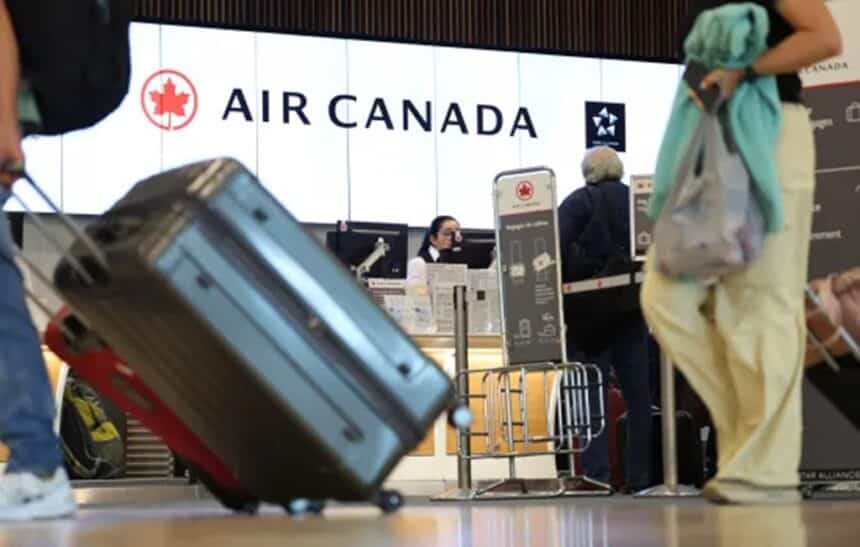
TORONTO – Air Canada has cancelled all its winter flights between Toronto Pearson (YYZ) and Jacksonville International (JAX) starting November 2025 through to March 2026.
The airline’s move has left many Canadian snowbirds, especially retirees who head south each winter, forced to rethink their travel plans. For years, this direct route offered an easy way to reach the sunny coast of northeast Florida. Now, regular travellers must look for alternatives.
The cut in service is part of Air Canada’s seasonal schedule changes. Airlines across North America have seen fewer people travelling between Canada and the US this year. Data from Statistics Canada shows travel from Canada to the US dropped 14 percent in April and 24.2 percent in May 2025 compared to last year.
Experts blame rough relations between Canada and the US as a main factor. Tensions over trade and political comments, including remarks from US President Donald Trump suggesting Canada become the “51st state” and talk about new tariffs, have upset Canadians and put some off visiting the US.
Coupled with this, the loonie remains weak. Heightened security at the border has also led some to think twice about heading south this year.
Air Canada isn’t just reacting to less demand. The airline wants to focus resources on routes that continue to perform well. The Toronto-Jacksonville leg used a Bombardier CRJ 900 that seats 76 and takes about two and a half hours, but with fewer people booking, Air Canada will move these planes to busier destinations.
This winter, the airline is growing its service to Europe, with more flights to Paris, Rome, and Frankfurt. Mark Galardo, executive vice president of revenue and network planning, said bookings for direct flights between Canada and the US are down in the low teen percentages for the coming six months. To keep business healthy, Air Canada is shifting planes to where they get better returns.
How This Impacts Travellers
Losing the direct connection to Jacksonville is a big change for Canadians, many of whom travel from Ontario and Quebec to spend the winter in Florida. Jacksonville’s mild weather, beautiful beaches, and affordability make it a favourite spot for snowbirds. It was also the only Florida city that Air Canada served nonstop from Canada. Now, travellers who usually fly straight to Jacksonville must plan new routes or switch airlines.
The most likely alternatives are connecting flights into Orlando (MCO) or Miami (MIA), then driving to Jacksonville. That often means tacking on two hours or more to the trip—not ideal for retirees or anyone managing health concerns or tight budgets.
Margaret Ellis, a Toronto retiree who spends her winters in Jacksonville, summed up the mood: “We picked this route because it made things so simple. Now we’re facing longer trips and higher prices, which really isn’t great for seniors.”
This drop in Canadian visitors could hurt local economies in Florida. The tourism sector relies on Canadian dollars, especially during winter. A 10 percent decrease in Canadian travellers could mean a loss of more than $2.1 billion and up to 140,000 jobs in the US, according to the US Travel Association.
With some cities already seeing fewer visitors from up north, uncertainty may linger if relations between the two countries don’t warm up.
Wider Reductions in Air Canada’s Schedule
This isn’t Air Canada’s only change for winter 2025-26. The airline has also pulled the plug on direct flights from Montreal to Detroit and Minneapolis, Toronto to Indianapolis, and Vancouver to Tampa. Earlier this year, flights between Canada and Florida, including those to Fort Lauderdale and Orlando, were downsized as larger planes (like the Airbus A321) were swapped for smaller models (such as the A319).
These decisions follow a rocky year for the airline industry. Thunderstorms, heavy winds, and other weather events caused about 350 flight cancellations and delays in Canada this June. Toronto, Montreal, and Vancouver faced much of the backlog, with Air Canada and Jazz Aviation working to clear delays. On top of weather woes, a possible pilot strike last September forced Air Canada to shuffle schedules even though a walkout was avoided.
On the financial side, Air Canada is under the microscope. The carrier posted a 1 percent dip in revenue for early 2025, collecting $5.2 billion. Executives had hoped for $30 billion by 2028, but rising fuel bills, a weak Canadian economy, and ongoing currency troubles have made that target harder to reach. Mark Galardo said switching capacity to more promising markets is the right move at this moment.
Other Ways to Get to Jacksonville
Those still set on spending winter in Jacksonville will need to find new paths. A few US-based airlines, like United and Alaska, are bumping up Canada-US flights. United increased its schedule by almost 4 percent while Alaska saw a jump of over 14 percent for 2025.
Travellers can also look for flights with WestJet or Porter Airlines into neighbouring Florida cities, though these airlines have also made cuts due to lower demand. Some may decide to drive part of the journey or mix flights with ground transport. Planning will be key since options may fill up quickly.
Air Canada says it will help impacted passengers with refunds or new bookings according to its cancellation policy. Travellers will get notices about the changes and can use Air Canada’s app or website for help. Under Canadian rules, travellers affected by carrier-driven cancellations may also qualify for compensation, such as $400 or the next available rebooking.
This pause in service from Toronto to Jacksonville highlights how quickly travel options can change due to shifting demand and global events. For Canadian snowbirds, finding a way to Florida now means more planning and flexibility. Air Canada expects to restart this route in March 2026, but future schedules could remain uncertain if political or economic problems continue.
Travellers should look at other routes, review their travel insurance, and watch for airline updates. While escaping the cold might take a bit more effort this year, the Florida sun still waits—just with a new travel plan.
Related News:
Air Canada Backs Down After 4-Year Legal Battle, Pays B.C. Couple $2,000