





MONTREAL — Canadians are voicing strong concerns after a recent Royal Canadian Mounted Police (RCMP) comment suggested that “traditional Canadian values” could signal extremist leanings.
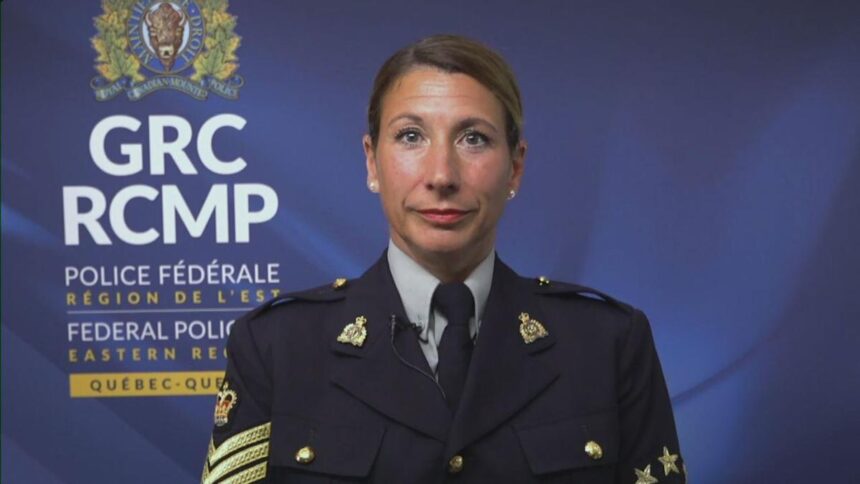
The statement, made by RCMP spokeswoman Staff Sgt. Camille Habe has sparked heated debate across the country. Many believe the force has crossed a line, venturing into political territory and challenging ideas long held as central to Canadian identity.
After criticism erupted on social media, especially on X, the RCMP issued a follow-up statement, but the attempt to clarify has done little to resolve public unease. Many now accuse the RCMP of promoting “woke” attitudes at the expense of objectivity and trust.
Staff Sgt. Habe, speaking for the RCMP, reportedly listed “traditional Canadian values” as a possible marker during a discussion about recognising early warning signs of radicalisation.
While the full details of the exchange remain unclear, posts on X indicate that the RCMP was talking about detecting possible ideological threats. This hit a nerve with Canadians, many of whom saw the message as an insult to core beliefs such as family, local community, individual responsibility, and national heritage.
The response online was immediate and fierce. Many users said they felt targeted, insisting that values like these are what unite Canadians. One X user argued, “The RCMP now treats ‘traditional values’ as dangerous.
This targets every parent, every person of faith, and every citizen who believes in community and family. Are we now seen as the enemy?” Another wrote, “Out of all the signs to choose from, the RCMP picked ‘traditional values.’ Details are missing here, but I want to know more.” These reactions reflect a sense of betrayal among many who feel the RCMP should stand up for, not criticise, Canadian traditions.
Clarification Brings Little Relief
Under pressure, the RCMP released a clarification. The force said it did not intend to cast all traditional values as extremist, but wanted to warn that some groups may twist these ideas for their ends.
Coverage by The Epoch Times said the RCMP stressed that the values themselves were not the problem, but could be exploited by bad actors. This explanation failed to settle things. Many said the clarification missed the real issue: why single out traditional values in the first place?
Scepticism spread online, with one post reading, “RCMP says ‘traditional values’ signal extremism. This is madness.” Another added, “So loving your country and your family is now suspicious? Welcome to 2025.” The controversy highlights growing doubts about the RCMP’s impartiality, with some accusing the agency of letting politics influence its work.
Debate Over RCMP’s Diversity Policies
This uproar ties into wider criticism that the RCMP has adopted more progressive policies at the cost of its historic neutrality. Detractors highlight the agency’s Diversity, Equity, and Inclusion (DEI) programmes, which include mandatory courses on racism and unconscious bias, as proof of this shift. Critics argue that these changes put ideology ahead of practical policing and merit. Some now feel that long-held Canadian values are being treated with suspicion inside the force.
Many believe these policies are out of touch with the needs of frontline officers and the communities they serve. Some users on X lamented, “Canadian institutions no longer reflect us. The RCMP’s attack on traditional values is proof.” Another warned, “If traditional values are now threats, what’s next—policing what we think?” The perception that DEI policies have made the RCMP less neutral has fed resentment and a sense that the agency is drifting away from its roots.
Divided Public Reaction
The RCMP’s statement has laid bare a deep divide. Many Canadians, especially those with conservative or traditional views, are outraged that values such as family, faith, and patriotism could be linked with extremism. For them, these beliefs have shaped Canada for generations and are a source of pride. They argue the RCMP risks damaging its reputation by alienating the very people who have long supported it.
There are also concerns about the RCMP’s standing as a trustworthy national body. Allegations of bias and overstepping are mounting, especially as crime rates rise in major cities like Toronto and Vancouver. Many fear that by criticising traditional values, the RCMP is driving a wedge between itself and the public at a time when cooperation is needed most.
Broader Fears of Lost Freedoms
Some see the RCMP’s comments as part of a pattern of shrinking freedoms. From the debate over Bill C-63 and online censorship to controversial law enforcement tactics during the COVID-19 pandemic, many believe Canadian institutions are becoming more hostile to conventional ways of life. The hint that holding “traditional Canadian values” could be suspicious adds to worries about increasing surveillance and suppression of dissent.
This feeling is echoed in posts on X. One user wrote, “First our speech is policed, now our beliefs. The RCMP should protect us, not tell us what to believe.” Another warned, “This is how it starts: normal people labelled as threats, all to justify more control. Canadians must pay attention.” Conservative voices, in particular, say there is now an urgent need to defend the Canadian way of life.
This situation has put the RCMP at a crossroads. Restoring the public’s trust requires more than a simple statement; it calls for honest communication, open discussion, and a renewed pledge to fairness. Critics are calling for a full review of the RCMP’s diversity and training programmes to guarantee that no group or ideology is unfairly targeted. Others say the force needs to connect directly with communities to repair damaged relationships.
Right now, the RCMP’s remarks about traditional values have left many Canadians frustrated and disappointed. The online backlash shows how deeply people care about values like family, faith, and freedom—and how strongly they will fight to protect them. As one X user summed up, “The RCMP should stand by our values, not attack them.” Whether the RCMP can regain its reputation as a fair and trusted agency is still unknown, but Canadians will be paying close attention.
Disclaimer: The views in this article reflect public responses and news reports, mainly from X and other sources. The facts around the RCMP’s comments are still developing, so more details may come to light.